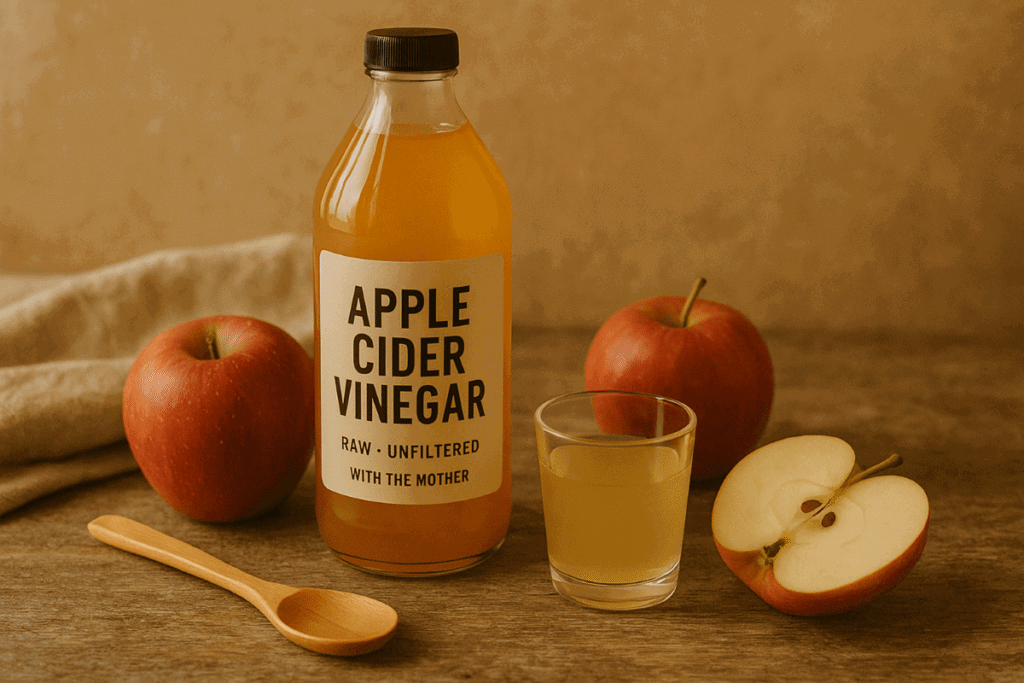
Raw, unfiltered apple cider vinegar — simple, natural, and deeply nourishing.
Apple Cider Vinegar (ACV) is one of the simplest wellness tools you can add to your day. It supports balanced blood sugar, digestion, metabolism, inflammation reduction, and overall vitality. When used correctly and mindfully, ACV becomes a powerful part of natural healing.
What Is Apple Cider Vinegar?
Apple cider vinegar is made from fermented apples. Yeast converts apple sugars into alcohol, and beneficial bacteria turn that alcohol into acetic acid, the main active compound responsible for ACV’s therapeutic effects.
Raw, unfiltered ACV with “the mother” contains probiotics, enzymes, and proteins that support gut health and digestion.
Science-Backed Benefits of Apple Cider Vinegar
1. Supports Healthy Blood Sugar
ACV lowers the body’s glycemic response by slowing starch digestion and improving insulin sensitivity. Studies show ACV can:
- Minimize blood sugar spikes after meals
- Improve fasting glucose
- Support appetite control
- Benefit people with insulin resistance or PCOS
This makes ACV especially helpful when meals include rice, pasta, bread, or sweets.
2. Enhances Digestion
ACV increases stomach acidity and supports the breakdown of proteins and fats. It may:
- Reduce bloating from low stomach acid
- Improve nutrient absorption
- Support healthy gut bacteria
- Ease mild digestive discomfort
People with low stomach acid often feel relief when taking ACV before meals.
3. Supports Gentle Weight Balance
ACV helps control appetite, slows gastric emptying, and keeps blood sugar steady. These actions help prevent overeating and support long-term metabolic balance.
Pair ACV with fiber-rich foods like Quinoa for better results.
Although ACV isn’t a miracle weight-loss product, it works well as part of a whole-food lifestyle.
4. Natural Antimicrobial Properties
ACV kills harmful bacteria and fungi. It can:
- Help preserve foods
- Reduce acne-causing bacteria (diluted on skin)
- Soothe scalp issues such as dandruff
- Clean surfaces naturally
Use only diluted ACV for topical or cleaning purposes.
5. Supports Heart Health
Research shows that ACV may:
- Reduce triglycerides
- Lower LDL (“bad”) cholesterol
- Increase HDL (“good”) cholesterol
- Support healthy blood pressure
Acetic acid and apple antioxidants work together to support cardiovascular function.
6. Helps Reduce Inflammation
ACV contains polyphenols—antioxidants that help reduce oxidative stress in the body. This supports cellular repair and helps maintain the long-term balance of inflammation.
Combine ACV with warming, anti-inflammatory foods like Ginger and Spinach.
7. Supports Skin & Hair (When Diluted)
ACV restores the skin’s natural pH and helps gently exfoliate. Diluted ACV can:
- Reduce mild acne
- Soothe itchy scalp
- Remove buildup from hair
- Add shine and softness
Never apply undiluted ACV to skin.
You can also check this for more vinegar uses and considerations.
Who Benefits Most From ACV?
People who may benefit include:
- Those with insulin resistance or prediabetes
- Individuals with PCOS
- People dealing with bloating or slow digestion
- Anyone wanting gentle metabolic support
- Those seeking natural antimicrobial solutions
Who Should Be Careful With ACV?
Avoid or limit use if you have:
- GERD or acid reflux
- Stomach ulcers
- Low potassium levels
- Severe enamel sensitivity
- Kidney issues
- Blood sugar medications or diuretics
Always consult a doctor if you are in doubt.
How to Use Apple Cider Vinegar
1. Drink It (Diluted Only)
Never drink ACV straight.
Simple ACV drink:
- 1–2 tsp ACV
- 1 cup warm water
- Optional: honey, cinnamon, or fresh ginger
Best taken with meals to help support blood sugar levels.
2. Use It in Cooking
ACV adds freshness and depth to dishes:
- Salad dressings
- Marinades
- Soups
- Pickled vegetables
- Stir-fries
- Bone broth (helps extract minerals)
3. Use on Skin & Hair (Diluted)
Skin toner: 1 part ACV + 4 parts water
Hair rinse: 1 tbsp ACV + 1 cup water
Patch-test first.
4. For Digestion
Individuals with low stomach acid may benefit from taking ACV before meals to support digestion.
Avoid if you have GERD or ulcers.
How to Choose the Best ACV
Look for:
✔ Raw
✔ Unfiltered
✔ Organic
✔ With “the mother.”
✔ Amber-colored glass bottle
Avoid:
❌ Flavored ACVs with added sugar
❌ Filtered and clear varieties
❌ ACV gummies (mostly sugar, little vinegar)
How Much Should You Take?
- General wellness: 1–2 tsp diluted once daily
- Blood sugar support: with meals
- Maximum: 1–2 tbsp per day (diluted)
More is not better.
Love.Eat.Live Tip
ACV supports your body best when used gently and consistently. Think of it as a small, daily act of nourishment rather than a quick fix.
You might also enjoy:
The Healing Power of Bone Broth (gut repair)
Garlic: Small but Mighty (immunity)
Frequently Asked Questions (FAQ)
Is apple cider vinegar safe to drink every day?
Yes, ACV is safe in small, diluted amounts (1–2 teaspoons per day). Always dilute to protect your teeth and stomach lining.
Can apple cider vinegar help with digestion?
ACV may support digestion by increasing stomach acid and enzyme activity. It can help reduce bloating if you have low stomach acid.
Does apple cider vinegar help with weight loss?
ACV is not a quick fix, but studies show it can support weight balance by improving insulin sensitivity, reducing appetite, and slowing stomach emptying.
What type of apple cider vinegar is best?
Choose raw, unfiltered, organic ACV with “the mother.” This provides the highest amount of probiotics and beneficial compounds.
Can I drink ACV if I have acid reflux or ulcers?
No. ACV may worsen symptoms in people with GERD, ulcers, or stomach inflammation. Avoid it unless advised by a doctor.
Can I apply ACV directly on my skin?
Never use ACV undiluted. Mix 1 part ACV with 4 parts water and patch-test before applying to skin.
Can apple cider vinegar balance blood sugar?
Yes. Studies show ACV can improve insulin sensitivity and lower post-meal blood sugar spikes when taken with meals.
How much ACV should I take per day?
General wellness: 1–2 teaspoons, diluted.
Do not exceed 1–2 tablespoons per day.